Tips On Lawn Irrigation In Northern New Jersey.
This article will help anybody who is considering the purchase of a lawn sprinkler system for their home. We interviewed 21 year lawn irrigation expert Greg Tanzer of Greg Tanzer Sprinklers in Bergen County New Jersey, to find out exactly what you should know when considering a lawn sprinkler system. What we found out was very interesting. We also scoured the Internet to find the best resources that will help prepare you with the information you need to make the right decision. We started by asking Greg Tanzer to tell us what are the most common questions that new customers have when considering a lawn sprinkler system.
Many people inquire about rain sensors. They want to know if rain sensors are a necessary item for their system. In the state of New Jersey rain sensors are required by law. However, some sprinkler installers will tell you they are optional and add an additional cost to include https://www.youtube.com/watch?v=nfNmypOk45k rain sensors. All price quotes in New Jersey should have rain sensors included. Under the New Jersey mandate, even older systems that do not have rain sensors are supposed to be upgraded.
Another question many people ask is, "should I use drip irrigation?". According to Greg Tanzer, drip irrigation was developed in areas of the country that have limited water supplies such as areas of Arizona, California, and New Mexico. New Jersey is fortunate to have a good amount of available water. Some instances of when drip irrigation is appropriate are when plants are positioned in an awkward location such as a terraced landscape, or when you are providing irrigation to indoor plantings in a mall or greenhouse. One of the disadvantages of drip irrigation is that if it fails you are unlikely to know about it until there is dead plant material. That is because drip uses water in gallons per hour verses sprinklers th at use gallons per minute. When a sprinkler fails you have a "wash out" that produces a lot of noticeable water on the lawns surface, however by the time you realize there is a problem with your drip system, you generally have dead plant material.
Many people don't know that an improperly installed lawn sprinkler system can contaminate household drinking water causing severe illness that can even be fatal. Because of this, in New Jersey it is https://www.youtube.com/watch?v=nfNmypOk45k required by law to have a state certified backflow inspector install a backflow device in your system. This is a specialized check valve that will prevent the sprinkler water from mixing with your household water supply. If you go to sell your house and you do not have a backflow device installed in your sprinkler system, you will have to have one installed. Therefore it is critical to make sure your installer is a licensed backflow insp ector as well.
It is not uncommon to have very costly damage to your property during a sprinkler system installation that can cost you thousands of dollars. The best way to avoid this is to have a "mark out" done on your property. This is when all the utility companies come to your house and put their small flags on the lawn that show where there pipe or cable is buried. This is the responsibility of your installer. They must contact each utility company and request the mark out for your property. If your sprinkler company says that a mark out is not necessary, demand it or find another sprinkler company.
_Churchtown_2.JPG" width="326" />
These are just some of the critical things you must be aware of if you are considering a lawn sprinkler system for your home. Another great resource that answers these questions as well as the questions you should be asking your lawn sprinkler company is called, "Tips That Can Save You Thousands On Lawn Irrigation In Northern New Jersey". This excellent buyer's guide is free and can be found at NJlawnsprinklertips.com. This is a must read for anyone in New Jersey considering a https://www.houzz.com/photos/landscape lawn sprinkler system for their home.
http://www.articlebiz.com/article/1051293600-1-lawn-sprinkler-system-bergen-county-new-jersey/
Friday, 16 June 2017

Thursday, 15 June 2017
Legal Archives - ArticleCity.com
Legal
What You Need to Do Immediately After a Car Accident

Feb 09, 2017
by ArticleCity Blog
0
0 Comments
Car http://members.calbar.ca.gov/search/member.aspx accidents Attorney College Station come out of nowhere, and when you're in a state of shock, it's hard to know what to do. This guide explains what you need to protect Best Attorney College Station yourself....
Read More
http://www.articlecity.com/articles/legal/article_1497.shtml
What You Need to Do Immediately After a Car Accident
Feb 09, 2017
by ArticleCity Blog
0
0 Comments
Car http://members.calbar.ca.gov/search/member.aspx accidents Attorney College Station come out of nowhere, and when you're in a state of shock, it's hard to know what to do. This guide explains what you need to protect Best Attorney College Station yourself....
Read More
http://www.articlecity.com/articles/legal/article_1497.shtml
Home Improvement :: How Solar Panels Work To Produce Solar Energy In Three Steps
For many, the concept of being able to tap into the sun and produce energy that can power their home, business, or automobile is a mysterious phenomenon. Unlocking the power of the sun in just a few simple steps can not only save you thousands on utility bills but also help create a more sustainable world by reducing our carbon footprint. Here is how solar panels work to produce energy:

1.Solar Panel Technology
Solar panels work to convert sunlight into electricity that your home can use, reducing your electricitybills. Solar panels come in a variety of sizes and shapes, and use a range of solar cell technology. The very best https://www.youtube.com/watch?v=aWoSWNwtVKA solar panels work harder by maximizing every drop of solar energy available throughout the day. The very best solar panels on the market can produce 70% more energy than lesser solar panels over the course of 25 years*. Studies have shown that a solid copper foundation adds strength to solar panels, and ultra pure silicon delivers optimal solar energy conversion. In fact, the world record efficiency of 24.2% delivers 44% more power per square foot of solar panels, meaning that they https://www.youtube.com/watch?v=aWoSWNwtVKA work to produce significantly more solar energy that panels made from other materials. It's also http://www.ibew.org/ imperative that your solar panels are engineered and tested to stand up to the world's harshest conditions, including temperature swings, battering winds, humidity, hail, and more. If the design or quality of the solar panel is inferior, it could mean that you'll be producing significantly less solar energy. A well-certified system has been shown to yield solar energy for mor e than 40 years.
2.Installing Solar Panels
Once you select the very highest quality solar panel technology, placement of the solar panels is key to generating solar energy. Some of the most popular locations for solar panel installation are on the roof of your home or business, surrounding areas on the ground, or a solar canopy. Your solar company will input your home's dimensions into a Computer Assisted Design (CAD) program to aid in assembling a permit submittal packet. Once the solar company has determined which location will generate the most solar energy and the number of panels will be installed, a typical solar system installation only takes a couple of days.
3.Monitoring The System
Once your system is installed, you'll immediately start producing solar energy that can be used to run your lights, computers, machinery, and any other electrical devices for your home or business. A utility meter tracks your energy use and counts both ways. You will earn credits for solar power produced but not used because it is pushed back into the utility grid. The utility grid still provides you with electricity at night, when you're not producing enough solar power, but any credits earned during the day cover that cost. Remember, the amount of solar energy you're producing can change throughout the year based on where you live and how much sunlight your panels are receiving on a daily basis. To check on how much solar energy your panels are producing you can use your online monitoring system to track production. If you notice a significant variation, notify your solar panel installer to ensure everything is working properly.
*https://us.sunpower.com/solar-panels-technology/facts/
http://www.articlebiz.com/article/1051640183-1-how-solar-panels-work-to-produce-solar-energy-in-three-steps/
1.Solar Panel Technology
Solar panels work to convert sunlight into electricity that your home can use, reducing your electricitybills. Solar panels come in a variety of sizes and shapes, and use a range of solar cell technology. The very best https://www.youtube.com/watch?v=aWoSWNwtVKA solar panels work harder by maximizing every drop of solar energy available throughout the day. The very best solar panels on the market can produce 70% more energy than lesser solar panels over the course of 25 years*. Studies have shown that a solid copper foundation adds strength to solar panels, and ultra pure silicon delivers optimal solar energy conversion. In fact, the world record efficiency of 24.2% delivers 44% more power per square foot of solar panels, meaning that they https://www.youtube.com/watch?v=aWoSWNwtVKA work to produce significantly more solar energy that panels made from other materials. It's also http://www.ibew.org/ imperative that your solar panels are engineered and tested to stand up to the world's harshest conditions, including temperature swings, battering winds, humidity, hail, and more. If the design or quality of the solar panel is inferior, it could mean that you'll be producing significantly less solar energy. A well-certified system has been shown to yield solar energy for mor e than 40 years.
2.Installing Solar Panels
Once you select the very highest quality solar panel technology, placement of the solar panels is key to generating solar energy. Some of the most popular locations for solar panel installation are on the roof of your home or business, surrounding areas on the ground, or a solar canopy. Your solar company will input your home's dimensions into a Computer Assisted Design (CAD) program to aid in assembling a permit submittal packet. Once the solar company has determined which location will generate the most solar energy and the number of panels will be installed, a typical solar system installation only takes a couple of days.
3.Monitoring The System
Once your system is installed, you'll immediately start producing solar energy that can be used to run your lights, computers, machinery, and any other electrical devices for your home or business. A utility meter tracks your energy use and counts both ways. You will earn credits for solar power produced but not used because it is pushed back into the utility grid. The utility grid still provides you with electricity at night, when you're not producing enough solar power, but any credits earned during the day cover that cost. Remember, the amount of solar energy you're producing can change throughout the year based on where you live and how much sunlight your panels are receiving on a daily basis. To check on how much solar energy your panels are producing you can use your online monitoring system to track production. If you notice a significant variation, notify your solar panel installer to ensure everything is working properly.
*https://us.sunpower.com/solar-panels-technology/facts/
http://www.articlebiz.com/article/1051640183-1-how-solar-panels-work-to-produce-solar-energy-in-three-steps/
Zao Wou-ki: Painting beyond words (1920-2013)
Story highlightsChinese-French painter Zao Wou-ki died Tuesday at age 93Zao was regarded as one of foremost Chinese contemporary painters of the 20th centuryZao was uniquely able to combine cultures, aesthetic visions of France and China in his work
The Chinese-French painter Zao Wou-ki once told me that painting expresses the thoughts we struggle https://collegepro.com/ to put into words. Faced with this challenge, "It's easier to learn English!" he joked, his wit shining through, even though Alzheimer's disease had already begun its slow, relentless onslaught on his mind.
Zao, widely regarded as one of the foremost Chinese contemporary painters of the 20th century, passed away at his home in Switzerland on Tuesday at the age of 93.
Born in Beijing in 1920, he formed part of the second generation of Chinese artists to turn westward in their search for inspiration. Encouraged by the French-educated Chinese artist Lin Feng mian, his teacher at the prestigious Hangzhou National College of Art (today the China Academy of Art), he relocated to Paris in 1948. Although he did not know it at the time, the move would be permanent, due in part to the rapidly changing political situation in China.
Apart from brief trips abroad, Zao would remain in France until the year before his death, one of the few Chinese artists from his generation to emigrate to Europe. Embraced by France, he was elected to the prestigious Academie des Beaux Arts society in 2002 and received the Legion of Honor in 2006 from then-president Jacques Chirac.
For Zao and his contemporaries, Paris represented the source of modern art. Living there meant direct access to the paintings that he had until then only encountered as black-and-white reproductions in art magazines. An oil painter by vocation, he immersed himself in the riches that surrounded him -- heading directly to the Louvre on the very day he arrived in the city.
Meanwhile, with the assistance of his friend and mentor, noted poet and painter Henri Michaux, and blessed with the warm charm and wit that would impress me decades later, Zao cultivated an extensive circle of fellow artists and cultural figures. In just a few years, he established himself as an integral member of the postwar French art world.
Zao worked hard to find his artistic voice. At first he made a determined effort to distance himself from ink painting -- the medium most closely associated with the Chinese painting tra dition-- and subject matter that might be construed as overtly Chinese. He wished to be appreciated on his own merits and not to fall victim to stereotype.
His breakthrough, however, came with his 1954 masterpiece "Wind," a painting that was both his first purely abstract work and a return to his origins: the inky black forms rising in two wavering columns are abstractions of oracle bone characters -- the most ancient of Chinese scripts.
In the decades that followed, Zao committed himself fully to abstract painting, rarely using even figurative titles after 1959. Instead, he titled his works with their date of completion, marking their entry into the world. The lyrical qualities that defined him as an artist appeared early on, first in his oil paintings and later in his ink paintings, after his reengagement with the medium in the early 1970s: oscillating planes of color, light, and shade met, collided, and diverged, skidding across the surface of his works.
The apparent disorder of his paintings concealed an underlying structure, sometimes described as Daoist in nature, which bore striking parallels to a similar balance between order and chaos found in Chinese traditional painting. In Zao's case, this phenomenon is perhaps best understood as a self-statement: the artist's insistence on his personal and aesthetic identity in the face of the vagaries of borders and time.
Zao's given name, "Wou-ki" (or "Wuji" in the standard Hanyu Pinyin romanization used in China), means "no boundaries." No single phrase better encapsulates the union in his person and art of the two often disparate cultures and aesthetic visions of France and China.
"French thought and Chinese thought are not the same," he told me. "It's hard to translate between them. Sometimes you must wear yourself out trying to understand. Painting must express these feelings."

An artist friend once asked about my research. Hearing that I studied Zao Wou-ki, he grew suddenly pensive. "Zao Wou-ki," he mused, "his work isn't representative of either Chinese or French art." "Yes," I answered. "He represents himself, and that is enough."
http://www.cnn.com/2013/04/11/opinion/painter-zao-wou-ki/index.html
The Chinese-French painter Zao Wou-ki once told me that painting expresses the thoughts we struggle https://collegepro.com/ to put into words. Faced with this challenge, "It's easier to learn English!" he joked, his wit shining through, even though Alzheimer's disease had already begun its slow, relentless onslaught on his mind.
Zao, widely regarded as one of the foremost Chinese contemporary painters of the 20th century, passed away at his home in Switzerland on Tuesday at the age of 93.
Born in Beijing in 1920, he formed part of the second generation of Chinese artists to turn westward in their search for inspiration. Encouraged by the French-educated Chinese artist Lin Feng mian, his teacher at the prestigious Hangzhou National College of Art (today the China Academy of Art), he relocated to Paris in 1948. Although he did not know it at the time, the move would be permanent, due in part to the rapidly changing political situation in China.
Apart from brief trips abroad, Zao would remain in France until the year before his death, one of the few Chinese artists from his generation to emigrate to Europe. Embraced by France, he was elected to the prestigious Academie des Beaux Arts society in 2002 and received the Legion of Honor in 2006 from then-president Jacques Chirac.
For Zao and his contemporaries, Paris represented the source of modern art. Living there meant direct access to the paintings that he had until then only encountered as black-and-white reproductions in art magazines. An oil painter by vocation, he immersed himself in the riches that surrounded him -- heading directly to the Louvre on the very day he arrived in the city.
Meanwhile, with the assistance of his friend and mentor, noted poet and painter Henri Michaux, and blessed with the warm charm and wit that would impress me decades later, Zao cultivated an extensive circle of fellow artists and cultural figures. In just a few years, he established himself as an integral member of the postwar French art world.
Zao worked hard to find his artistic voice. At first he made a determined effort to distance himself from ink painting -- the medium most closely associated with the Chinese painting tra dition-- and subject matter that might be construed as overtly Chinese. He wished to be appreciated on his own merits and not to fall victim to stereotype.
His breakthrough, however, came with his 1954 masterpiece "Wind," a painting that was both his first purely abstract work and a return to his origins: the inky black forms rising in two wavering columns are abstractions of oracle bone characters -- the most ancient of Chinese scripts.
In the decades that followed, Zao committed himself fully to abstract painting, rarely using even figurative titles after 1959. Instead, he titled his works with their date of completion, marking their entry into the world. The lyrical qualities that defined him as an artist appeared early on, first in his oil paintings and later in his ink paintings, after his reengagement with the medium in the early 1970s: oscillating planes of color, light, and shade met, collided, and diverged, skidding across the surface of his works.
The apparent disorder of his paintings concealed an underlying structure, sometimes described as Daoist in nature, which bore striking parallels to a similar balance between order and chaos found in Chinese traditional painting. In Zao's case, this phenomenon is perhaps best understood as a self-statement: the artist's insistence on his personal and aesthetic identity in the face of the vagaries of borders and time.
Zao's given name, "Wou-ki" (or "Wuji" in the standard Hanyu Pinyin romanization used in China), means "no boundaries." No single phrase better encapsulates the union in his person and art of the two often disparate cultures and aesthetic visions of France and China.
"French thought and Chinese thought are not the same," he told me. "It's hard to translate between them. Sometimes you must wear yourself out trying to understand. Painting must express these feelings."
An artist friend once asked about my research. Hearing that I studied Zao Wou-ki, he grew suddenly pensive. "Zao Wou-ki," he mused, "his work isn't representative of either Chinese or French art." "Yes," I answered. "He represents himself, and that is enough."
http://www.cnn.com/2013/04/11/opinion/painter-zao-wou-ki/index.html
Wednesday, 14 June 2017
Garden
From Wikipedia, the free encyclopedia
For other uses, see Garden (disambiguation).
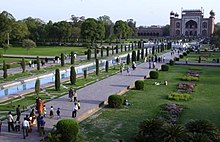
Garden of the Taj https://www.amazon.com/Gardening-Lawn-Care/b?ie=UTF8&node=3610851 Mahal, India

Royal gardens of Reggia di Caserta, Italy
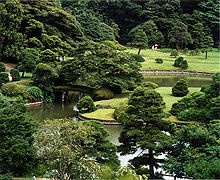
A kaiyu-shiki or strolling Japanese garden
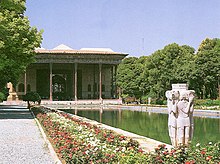
Chehel Sotoun Garden, Esfahan, Iran
A garden is a planned space, usually outdoors, set aside for the display, cultivation, and enjoyment of plants and other forms of nature. The garden can incorporate both natural and man-made materials. The most common form today is known as a residential garden, but the term garden has traditionally been a more general one. Zoos, which display wild animals in simulated natural habitats, were formerly called zoological gardens.[1][2] Western gardens are almost universally based on plants, with garden often signifying a shortened form of botanical garden.
Some traditional types of eastern gardens, such as Zen gardens, use plants sparsely or not at all. Xeriscape gardens use local native plants that do not require irrigation or extensive use of other resources while still providing the benefits of a garden environment. Gardens may exhibit structural enhancements, some times called follies, including water features such as fountains, ponds (with or without fish), waterfalls or creeks, dry creek beds, statuary, arbors, trellises and more.
Some gardens are for ornamental purposes only, while some gardens also produce food crops, sometimes in separate areas, or sometimes intermixed with the ornamental plants. Food-producing gardens are distinguished from farms by their smaller scale, more labor-intensive methods, and their purpose (enjoyment of a hobby rather than produce for sale). Flower gardens combine plants of different heights, colors, textures, and fragrances to create interest and delight the senses.
Gardening is the activity of growing and maintaining the garden. This work is done by an amateur or professional gardener. A gardener might also work in a non-garden setting, such as a park, a roadside embankment, or other public space. Landscape architecture is a related professional activity with landscape architects tending to sp ecialise in design for public and corporate clients.
Contents
1 Etymology
2 Garden design
3 Designs for the Perfect Garden
4 Elements of a garden
5 Uses for the garden space
6 Types of gardens
7 Environmental impacts of gardens
8 Watering gardens
9 Wildlife in gardens
10 Climate change and gardens
11 In religion, art, and literature
12 Other similar spaces
13 See also
14 Notes
15 External links
Etymology
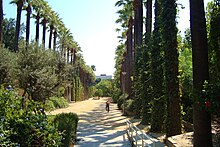
Nicosia municipal gardens, Cyprus
The etymology of the word gardening refers to enclosure: it is from Middle English gardin, from Anglo-French gardin, jardin, of Germanic origin; akin to Old High German gard, gart, an enclosure or compound, as in Stuttgart. See Grad (Slavic settlement) for more complete etymology.[3] The words yard, court, and Latin hortus (meaning "garden," hence horticulture and orchard), are cognates--all referring to an enclosed space.[4]
The term "garden" in British English refers to a small enclosed area of land, usually adjoining a building.[5] This would be referred to as a yard in American English.
Garden design
Main article: Garden design
Garden design is the creation of plans fo r the layout and planting of gardens and landscapes. Gardens may be designed by garden owners themselves, or by professionals. Professional garden designers tend to be trained in principles of design and horticulture, and have a knowledge and experience of using plants. Some professional garden designers are also landscape architects, a more formal level of training that usually requires an advanced degree and often a state license.
Elements of garden design include the layout of hard landscape, such as paths, rockeries, walls, water features, sitting areas and decking, as well as the plants themselves, with consideration for their horticultural requirements, their season-to-season appearance, lifespan, growth habit, size, speed of growth, and combinations with other plants and landscape features. Consideration is also given to the maintenance needs of the garden, including the time or funds available for regular maintenance, which can affect the choices of plants regarding s peed of growth, spreading or self-seeding of the plants, whether annual or perennial, and bloom-time, and many other characteristics. Garden design can be roughly divided into two groups, formal and naturalistic gardens.[6]
The most important consideration in any garden design is, how the garden will be used, followed closely by the desired stylistic genres, and the way the garden space will connect to the home or other structures in the surrounding areas. All of these considerations are subject to the limitations of the budget. Budget limitations can be addressed by a simpler garden style with fewer plants and less costly hardscape materials, seeds rather than sod for lawns, and plants that grow quickly; alternatively, garden owners may choose to create their garden over time, area by area.
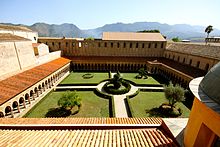
Example of a garden attached to a place of worship: the cloister of the Abbey of Monreale, Sicily, Italy

The Sunken Garden of Butchart Gardens, Victoria, British Columbia

Gardens of Versailles (France)

The back garden of the Umaid Bhawan Palace in Jodhpur, India

Tropical garden in the Faculty of Science, National University of Singapore in Singapore

Flower-bed with the date in Lignano Sabbiadoro, Italy

Gardens at Colonial Williamsburg, Williamsburg, Virginia, feature many heirloom varieties of plants.

Shitenn?-ji Honbo Garden in Osaka, Osaka prefecture, Japan - an example of a zen garden.
Designs for the Perfect Garden
Gardenesia
Greenery enclosures are for yards and family play fields, as well as be ideal areas for capacity sheds wherein one can just essentially stock unused family unit stuffs in the shed. As a component of the whole house outside, it is just however legitimate that garden sheds will likewise look adequate and in-in respect to the house's outline.
Elements of a garden

Garden at the centre of intersection in Shanghai.

Naturalistic design of a Chinese garden incorporated into the landscape, including a pavilion
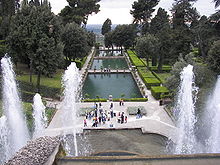
Garden with Fountains, Villa d'Este, Italy.
Most gardens consist of a mix of natural and constructed elements, although even very 'natural' gardens are always an inherently artificial creation. Natural elements present in a garden principally comprise flora (such as trees and weeds), fauna (such as arthropods and birds), soil, water, air and light. Constructed elements include paths, patios, decking, sculptures, drainage systems, lights and buildings (such as sheds, gazebos, pergolas and follies), but also living constructions such as flower beds, ponds and lawns.
Uses for the garden space

Partial view from the Botanical Garden of Curitiba (Southern Brazil): parterres, flowers, fountains, sculptures, greenhouses and tracks composes the place used for recreation and to study and protect the flora.
A garden can have aesthetic, functional, and recreational uses:
Cooperation with nature
Plant cultivation
Garden-based learning
Observation of nature
Bird- and insect-watching
Reflection on the changing seasons
Relaxation
Family dinners on the terrace
Children playing in the garden
Reading and relaxing in the hammock
Maintaining the flowerbeds
Pottering in the shed
Basking in warm sunshine
Escaping oppressive sunlight and heat
Growing useful produce
Flowers to cut and bring inside for indoor beauty
Fresh herbs and vegetables for cooking
Types of gardens

A typical Italian garden at Villa Garzoni, near Pistoia

Checkered garden in Tours, France

Zen garden, Ry?an-ji

French formal garden in the Loire Valley
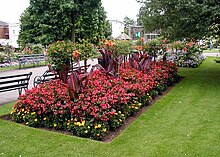

Bristol Zoo, England

Castelo Branco, Portugal
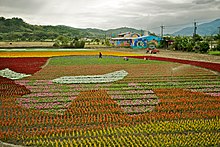
Hualien, Taiwan

The Italian gardens of El Escorial, Spain
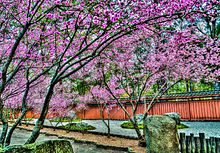
An ornamental garden in the Auburn Botanical Gardens, Sydney, Australia
Gardens may feature a particular plant or plant type(s);
Back garden
Bog garden
Cactus garden
Color garden
Fernery
Flower garden
Front yard
Kitchen garden
Mary garden
Orangery
Orchard
Rose garden
Shade garden
Vineyard
Wildflower garden
Winter garden
Gardens may feature a particular style or aesthetic:
Bonsai
Chinese garden
Dutch garden
English landscape garden
Gardens of the French Renaissance
French formal garden
French landscape garden
Italian Renaissance garden
Japan ese garden
Knot garden
Korean garden
Mughal garden
Natural landscaping
Persian garden
Roman gardens
Spanish garden
Terrarium
Trial garden
Tropical garden
Water garden
Wild garden
Xeriscaping
Zen garden
Types of garden:
Botanical garden
Butterfly garden
Butterfly zoo
Chinampa
Cold frame garden
Community garden
Container garden
Cottage garden
Cutting garden
Forest garden
Garden conservatory
Green wall
Greenhouse
Hanging garden
Hydroponic garden
Market garden
Rain garden
Raised bed gardening
Residential garden
Roof garden
Sacred garden
Sensory garden
Square foot garden
Vertical garden
Walled garden
Windowbox
Zoological garden
Environmental impacts of gardens
Gardeners may cause envir onmental damage by the way they garden, or they may enhance their local environment. Damage by gardeners can include direct destruction of natural habitats when houses and gardens are created; indirect habitat destruction and damage to Sprinkler System Installation Greenville provide garden materials such as peat, rock for rock gardens, and by the use of tapwater to irrigate gardens; the death of living beings in the garden itself, such as the killing not only of slugs and snails but also their predators such as hedgehogs and song thrushes by metaldehyde slug killer; the death of living beings outside the garden, such as local species extinction by indiscriminate plant collectors; and climate change caused by greenhouse gases produced by gardening.
Watering gardens
Some gardeners manage their gardens without using any water from outside the garden, and therefore do not deprive wetland habitats of the water they need to survive. Examples in Britain include Ventnor Botanic Garden on the Isle of Wight, and parts of Beth Chatto's garden in Essex, Sticky Wicket garden in Dorset, and the Royal Horticultural Society's gardens at Harlow Carr and Hyde Hall. Rain gardens absorb rainfall falling onto nearby hard surfaces, rather than sending it into stormwater drains.[7] For irrigation, see rainwater, sprinkler system, drip irrigation, tap water, greywater, hand pump and watering can.
Wildlife in gardens
Chris Baines's classic book 'How to make a wildlife garden'[8] was first published in 1985, and is still a good source of advice on how to create and manage a wildlife garden.
Climate change and gardens
Climate change will have many impacts on gardens, most of them negative, and these are detailed in 'Gardening in the Global Greenhouse' by Richard Bisgrove and Paul Hadley.[9] Gardens also contribute to climate change. Greenhouse gases can be produced by gardeners in many w ays. The three main greenhouse gases are carbon dioxide, methane, and nitrous oxide. Gardeners produce carbon dioxide directly by overcultivating soil and destroying soil carbon, by burning garden 'waste' on bonfires, by using power tools which burn fossil fuel or use electricity generated by fossil fuels, and by using peat. Gardeners produce methane by compacting the soil and making it anaerobic, and by allowing their compost heaps to become compacted and anaerobic. Gardeners produce nitrous oxide by applying excess nitrogen fertiliser when plants are not actively growing so that the nitrogen in the fertiliser is converted by soil bacteria to nitrous oxide. Gardeners can help to prevent climate change in many ways, including the use of trees, shrubs, ground cover plants and other perennial plants in their gardens, turning garden 'waste' into soil organic matter instead of burning it, keeping soil and compost heaps aerated, avoiding peat, switching from power tools to hand tools or changing their garden design so that power tools are not needed, and using nitrogen-fixing plants instead of nitrogen fertiliser.[10]
In religion, art, and literature
The Garden of Eden
Romance of the Rose
Nathaniel Hawthorne's short-story "Rappaccini's Daughter"
Wolfgang Amadeus Mozart's opera La finta giardiniera
Frances Hodgson Burnett's The Secret Garden
Elizabeth von Arnim's novels Elizabeth and Her German Garden and Solitary Summer
John Steinbeck's short-story The Chrysanthemums
John Berendt's novel Midnight in the Garden of Good and Evil
In Daphne du Maurier's novel "Rebecca" the unnamed narrator discovers that her husband loves his house and garden at Manderley so much that he murdered his first wife, Rebecca, when she told him she was pregnant with somebody else's child and that the child would inherit Manderley.
Other similar spaces
Other outdoor spaces that are similar to gardens include:< br>
A landscape is an outdoor space of a larger scale, natural or designed, usually unenclosed and considered from a distance.
A park is a planned outdoor space, usually enclosed ('imparked') and of a larger size. Public parks are for public use.
An arboretum is a planned outdoor space, usually large, for the display and study of trees.
A farm or orchard is for the production of food stuff.
A botanical garden is a type of garden where plants are grown both for scientific purposes and for the enjoyment and education of visitors.
A zoological garden, or zoo for short, is a place where wild animals are cared for and exhibited to the public.
A Kindergarten is a preschool educational institution for children and in the very sense of the word should have access or be part of a garden.
A Mnnergarten is a temporary day-care and activities space for men in German-speaking countries while their wives or girlfriends go shopping. Historically, the expression has also been used for gender-specific sections in lunatic asylums, monasteries and clinics.[11]
See also
Around the World in 80 Gardens
B?gh
Baug
Bottle garden
Climate-friendly gardening
Community gardening
Garden centre
Garden tourism
Gardener
Gardening
Heritage Gardens in Australia
History of gardening
Hortus conclusus
List of botanical gardens
List of companion plants
List of gardens
Museum of Garden History
National Public Gardens Day
Paradise, originally from an Iranian word meaning "enclosed," related to Garden of Eden
Verde Pulgar, a software application that assists with gardening
The Victory Garden TV series
Walled garden
Water garden
Notes
^ Garden history: philosophy and design, 2000 BC--2000 AD, Tom Turner. New York: Spon Press, 2005. ISBN 0-415-31748-7
^ The earth knows my name: food, culture, and sustainability in the gardens of ethnic Americans, Patricia Klindienst. Boston: Beacon Press, c2006. ISBN 0-8070-8562-6
^ "Etymology of the modern word gardin". Merriam Webster.
^ "Etymology of words referring to enclosures, probably from a Sanskrit stem. In German, for example, Stuttgart. The word is generic for compounds and walled cities, as in Stalingrad, and the Russian word for city, gorod. Gird and girdle are also related". Yourdictionary.com. Archived from the original on 2010-02-13.
^ The Compact Oxford English Dictionary
^ Chen, Gang (2010). Planting design illustrated (2nd ed.). Outskirts Press, Inc. p.3. ISBN978-1-4327-4197-6.
^ Dunnett and Clayden, Nigel and Andy (2007). Rain Gardens: Managing Water Sustainably in the Garden and Designed Landscape. Portland, Oregon, USA: Timber Press. ISBN978-0881928266.
^ Baines, Chris (2000). How to make a wildlife garden. London: Frances Lincoln. ISBN978-0711217119.
^ Bisgrove and Hadley, Richard and Paul (2002). Gardening in the Global Greenhouse: The impacts of climate change on gardens in the UK. Oxford: UK Climate Impacts Programme.
^ Ingram, Vince-Prue, and Gregory (editors), David S., Daphne, and Peter J. (2008). Science and the Garden: The scientific basis of horticultural practice. Oxford: Blackwell. ISBN9781405160636.
^ See: Jakob Fischel, Prag's K. K. Irrenanstalt und ihr Wirken seit ihrem Entstehen bis incl. 1850. Erlangen: Enke, 1853, OCLC14844310 (German)
External links

Wikiquote has quotations related to: Garden
 Media related to Garden at Wikimedia Commons
Media related to Gardens at Wi kimedia Commons
Media related to Gardens by type at Wikimedia Commons
Media related to File:CIA_memorial_garden_with_stone.jpg at Wikimedia Commons

Wikisource has the text of the 1911 Encyclopdia Britannica article garden.

Wikibooks' A Wikimanual of Gardening has more about this subject:
gardening
v
t
e
Horticulture and gardening
Gardening
History
Design
computer-aided
Garden tool
Green wall
Arboretum
Allotment
Butterfly
Community
Forest
French intensive
Guerrilla
Garden
Historic conservation
Landscape
Native
Parterre
Raised bed
Square foot
Sustainable
Xeriscaping

Types of gardens
Back
Biblical
Botanical
Butterfly
Byzantine
Cactus
Chinese
Color
Container
Cottage
Dutch
English
Fernery
Floating
Flower
French
formal
landscape
Renaissance
Front
Greek
Greenhouse
Hanging
Hgelkultur
Islamic
Italian
Japanese
Kitchen
Knot
Korean
Market
Mary
Monastic
Mughal
Orangery
Orchard
Persian
Bagh
Charbagh
Paradise
Philosophical
Pleasure
Roman
Spanish
Rain
Rose
Roof
Sacred
Scottish
Sculpture
Sensory
Shade
Therapeutic
Trial
Tropical
Victory
Vineyard
Walled
Water
Wildlife
Winter
Zen
Zoological
Horticulture
Agriculture
stock-free
sustainable
urban
Arboriculture
Botany
Companion planting
Crop
most valuable
Flora
Floriculture
Fruticulture
Genetically modified tree
Hydroculture
Indigenous
Intercropping
Landscape architecture
Oenology
Olericulture
Plant
breeding
propagation
drought tolerance
hardiness
Pomology
Postharvest physiology
Tropical
Urban
agriculture
horticulture
forestry
reforestation
Viticulture
Organic
Biodynamic agriculture
List of organic gardening and farming topics
Vegan organic gardening
Plant protection
Fungicide
Herbicide
Index of pesticide articles
List of fungicides
Pesticide
Plant disease forecasting
Pruning
Weed control
 Agriculture and agronomy portal
 Gardening portal
Commons
Authority control
GND: 4019286-6
NDL: 00572757

Retrieved from "https://en.wikipedia.org/w/index.php?title=Garden&oldid=785337002"
https://en.wikipedia.org/wiki/Garden
For other uses, see Garden (disambiguation).
Garden of the Taj https://www.amazon.com/Gardening-Lawn-Care/b?ie=UTF8&node=3610851 Mahal, India
Royal gardens of Reggia di Caserta, Italy
A kaiyu-shiki or strolling Japanese garden
Chehel Sotoun Garden, Esfahan, Iran
A garden is a planned space, usually outdoors, set aside for the display, cultivation, and enjoyment of plants and other forms of nature. The garden can incorporate both natural and man-made materials. The most common form today is known as a residential garden, but the term garden has traditionally been a more general one. Zoos, which display wild animals in simulated natural habitats, were formerly called zoological gardens.[1][2] Western gardens are almost universally based on plants, with garden often signifying a shortened form of botanical garden.
Some traditional types of eastern gardens, such as Zen gardens, use plants sparsely or not at all. Xeriscape gardens use local native plants that do not require irrigation or extensive use of other resources while still providing the benefits of a garden environment. Gardens may exhibit structural enhancements, some times called follies, including water features such as fountains, ponds (with or without fish), waterfalls or creeks, dry creek beds, statuary, arbors, trellises and more.
Some gardens are for ornamental purposes only, while some gardens also produce food crops, sometimes in separate areas, or sometimes intermixed with the ornamental plants. Food-producing gardens are distinguished from farms by their smaller scale, more labor-intensive methods, and their purpose (enjoyment of a hobby rather than produce for sale). Flower gardens combine plants of different heights, colors, textures, and fragrances to create interest and delight the senses.
Gardening is the activity of growing and maintaining the garden. This work is done by an amateur or professional gardener. A gardener might also work in a non-garden setting, such as a park, a roadside embankment, or other public space. Landscape architecture is a related professional activity with landscape architects tending to sp ecialise in design for public and corporate clients.
Contents
1 Etymology
2 Garden design
3 Designs for the Perfect Garden
4 Elements of a garden
5 Uses for the garden space
6 Types of gardens
7 Environmental impacts of gardens
8 Watering gardens
9 Wildlife in gardens
10 Climate change and gardens
11 In religion, art, and literature
12 Other similar spaces
13 See also
14 Notes
15 External links
Etymology
Nicosia municipal gardens, Cyprus
The etymology of the word gardening refers to enclosure: it is from Middle English gardin, from Anglo-French gardin, jardin, of Germanic origin; akin to Old High German gard, gart, an enclosure or compound, as in Stuttgart. See Grad (Slavic settlement) for more complete etymology.[3] The words yard, court, and Latin hortus (meaning "garden," hence horticulture and orchard), are cognates--all referring to an enclosed space.[4]
The term "garden" in British English refers to a small enclosed area of land, usually adjoining a building.[5] This would be referred to as a yard in American English.
Garden design
Main article: Garden design
Garden design is the creation of plans fo r the layout and planting of gardens and landscapes. Gardens may be designed by garden owners themselves, or by professionals. Professional garden designers tend to be trained in principles of design and horticulture, and have a knowledge and experience of using plants. Some professional garden designers are also landscape architects, a more formal level of training that usually requires an advanced degree and often a state license.
Elements of garden design include the layout of hard landscape, such as paths, rockeries, walls, water features, sitting areas and decking, as well as the plants themselves, with consideration for their horticultural requirements, their season-to-season appearance, lifespan, growth habit, size, speed of growth, and combinations with other plants and landscape features. Consideration is also given to the maintenance needs of the garden, including the time or funds available for regular maintenance, which can affect the choices of plants regarding s peed of growth, spreading or self-seeding of the plants, whether annual or perennial, and bloom-time, and many other characteristics. Garden design can be roughly divided into two groups, formal and naturalistic gardens.[6]
The most important consideration in any garden design is, how the garden will be used, followed closely by the desired stylistic genres, and the way the garden space will connect to the home or other structures in the surrounding areas. All of these considerations are subject to the limitations of the budget. Budget limitations can be addressed by a simpler garden style with fewer plants and less costly hardscape materials, seeds rather than sod for lawns, and plants that grow quickly; alternatively, garden owners may choose to create their garden over time, area by area.
Example of a garden attached to a place of worship: the cloister of the Abbey of Monreale, Sicily, Italy
The Sunken Garden of Butchart Gardens, Victoria, British Columbia
Gardens of Versailles (France)
The back garden of the Umaid Bhawan Palace in Jodhpur, India
Tropical garden in the Faculty of Science, National University of Singapore in Singapore
Flower-bed with the date in Lignano Sabbiadoro, Italy
Gardens at Colonial Williamsburg, Williamsburg, Virginia, feature many heirloom varieties of plants.
Shitenn?-ji Honbo Garden in Osaka, Osaka prefecture, Japan - an example of a zen garden.
Designs for the Perfect Garden
Gardenesia
Greenery enclosures are for yards and family play fields, as well as be ideal areas for capacity sheds wherein one can just essentially stock unused family unit stuffs in the shed. As a component of the whole house outside, it is just however legitimate that garden sheds will likewise look adequate and in-in respect to the house's outline.
Elements of a garden
Garden at the centre of intersection in Shanghai.
Naturalistic design of a Chinese garden incorporated into the landscape, including a pavilion
Garden with Fountains, Villa d'Este, Italy.
Most gardens consist of a mix of natural and constructed elements, although even very 'natural' gardens are always an inherently artificial creation. Natural elements present in a garden principally comprise flora (such as trees and weeds), fauna (such as arthropods and birds), soil, water, air and light. Constructed elements include paths, patios, decking, sculptures, drainage systems, lights and buildings (such as sheds, gazebos, pergolas and follies), but also living constructions such as flower beds, ponds and lawns.
Uses for the garden space
Partial view from the Botanical Garden of Curitiba (Southern Brazil): parterres, flowers, fountains, sculptures, greenhouses and tracks composes the place used for recreation and to study and protect the flora.
A garden can have aesthetic, functional, and recreational uses:
Cooperation with nature
Plant cultivation
Garden-based learning
Observation of nature
Bird- and insect-watching
Reflection on the changing seasons
Relaxation
Family dinners on the terrace
Children playing in the garden
Reading and relaxing in the hammock
Maintaining the flowerbeds
Pottering in the shed
Basking in warm sunshine
Escaping oppressive sunlight and heat
Growing useful produce
Flowers to cut and bring inside for indoor beauty
Fresh herbs and vegetables for cooking
Types of gardens
A typical Italian garden at Villa Garzoni, near Pistoia
Checkered garden in Tours, France
Zen garden, Ry?an-ji
French formal garden in the Loire Valley
Bristol Zoo, England
Castelo Branco, Portugal
Hualien, Taiwan
The Italian gardens of El Escorial, Spain
An ornamental garden in the Auburn Botanical Gardens, Sydney, Australia
Gardens may feature a particular plant or plant type(s);
Back garden
Bog garden
Cactus garden
Color garden
Fernery
Flower garden
Front yard
Kitchen garden
Mary garden
Orangery
Orchard
Rose garden
Shade garden
Vineyard
Wildflower garden
Winter garden
Gardens may feature a particular style or aesthetic:
Bonsai
Chinese garden
Dutch garden
English landscape garden
Gardens of the French Renaissance
French formal garden
French landscape garden
Italian Renaissance garden
Japan ese garden
Knot garden
Korean garden
Mughal garden
Natural landscaping
Persian garden
Roman gardens
Spanish garden
Terrarium
Trial garden
Tropical garden
Water garden
Wild garden
Xeriscaping
Zen garden
Types of garden:
Botanical garden
Butterfly garden
Butterfly zoo
Chinampa
Cold frame garden
Community garden
Container garden
Cottage garden
Cutting garden
Forest garden
Garden conservatory
Green wall
Greenhouse
Hanging garden
Hydroponic garden
Market garden
Rain garden
Raised bed gardening
Residential garden
Roof garden
Sacred garden
Sensory garden
Square foot garden
Vertical garden
Walled garden
Windowbox
Zoological garden
Environmental impacts of gardens
Gardeners may cause envir onmental damage by the way they garden, or they may enhance their local environment. Damage by gardeners can include direct destruction of natural habitats when houses and gardens are created; indirect habitat destruction and damage to Sprinkler System Installation Greenville provide garden materials such as peat, rock for rock gardens, and by the use of tapwater to irrigate gardens; the death of living beings in the garden itself, such as the killing not only of slugs and snails but also their predators such as hedgehogs and song thrushes by metaldehyde slug killer; the death of living beings outside the garden, such as local species extinction by indiscriminate plant collectors; and climate change caused by greenhouse gases produced by gardening.
Watering gardens
Some gardeners manage their gardens without using any water from outside the garden, and therefore do not deprive wetland habitats of the water they need to survive. Examples in Britain include Ventnor Botanic Garden on the Isle of Wight, and parts of Beth Chatto's garden in Essex, Sticky Wicket garden in Dorset, and the Royal Horticultural Society's gardens at Harlow Carr and Hyde Hall. Rain gardens absorb rainfall falling onto nearby hard surfaces, rather than sending it into stormwater drains.[7] For irrigation, see rainwater, sprinkler system, drip irrigation, tap water, greywater, hand pump and watering can.
Wildlife in gardens
Chris Baines's classic book 'How to make a wildlife garden'[8] was first published in 1985, and is still a good source of advice on how to create and manage a wildlife garden.
Climate change and gardens
Climate change will have many impacts on gardens, most of them negative, and these are detailed in 'Gardening in the Global Greenhouse' by Richard Bisgrove and Paul Hadley.[9] Gardens also contribute to climate change. Greenhouse gases can be produced by gardeners in many w ays. The three main greenhouse gases are carbon dioxide, methane, and nitrous oxide. Gardeners produce carbon dioxide directly by overcultivating soil and destroying soil carbon, by burning garden 'waste' on bonfires, by using power tools which burn fossil fuel or use electricity generated by fossil fuels, and by using peat. Gardeners produce methane by compacting the soil and making it anaerobic, and by allowing their compost heaps to become compacted and anaerobic. Gardeners produce nitrous oxide by applying excess nitrogen fertiliser when plants are not actively growing so that the nitrogen in the fertiliser is converted by soil bacteria to nitrous oxide. Gardeners can help to prevent climate change in many ways, including the use of trees, shrubs, ground cover plants and other perennial plants in their gardens, turning garden 'waste' into soil organic matter instead of burning it, keeping soil and compost heaps aerated, avoiding peat, switching from power tools to hand tools or changing their garden design so that power tools are not needed, and using nitrogen-fixing plants instead of nitrogen fertiliser.[10]
In religion, art, and literature
The Garden of Eden
Romance of the Rose
Nathaniel Hawthorne's short-story "Rappaccini's Daughter"
Wolfgang Amadeus Mozart's opera La finta giardiniera
Frances Hodgson Burnett's The Secret Garden
Elizabeth von Arnim's novels Elizabeth and Her German Garden and Solitary Summer
John Steinbeck's short-story The Chrysanthemums
John Berendt's novel Midnight in the Garden of Good and Evil
In Daphne du Maurier's novel "Rebecca" the unnamed narrator discovers that her husband loves his house and garden at Manderley so much that he murdered his first wife, Rebecca, when she told him she was pregnant with somebody else's child and that the child would inherit Manderley.
Other similar spaces
Other outdoor spaces that are similar to gardens include:< br>
A landscape is an outdoor space of a larger scale, natural or designed, usually unenclosed and considered from a distance.
A park is a planned outdoor space, usually enclosed ('imparked') and of a larger size. Public parks are for public use.
An arboretum is a planned outdoor space, usually large, for the display and study of trees.
A farm or orchard is for the production of food stuff.
A botanical garden is a type of garden where plants are grown both for scientific purposes and for the enjoyment and education of visitors.
A zoological garden, or zoo for short, is a place where wild animals are cared for and exhibited to the public.
A Kindergarten is a preschool educational institution for children and in the very sense of the word should have access or be part of a garden.
A Mnnergarten is a temporary day-care and activities space for men in German-speaking countries while their wives or girlfriends go shopping. Historically, the expression has also been used for gender-specific sections in lunatic asylums, monasteries and clinics.[11]
See also
Around the World in 80 Gardens
B?gh
Baug
Bottle garden
Climate-friendly gardening
Community gardening
Garden centre
Garden tourism
Gardener
Gardening
Heritage Gardens in Australia
History of gardening
Hortus conclusus
List of botanical gardens
List of companion plants
List of gardens
Museum of Garden History
National Public Gardens Day
Paradise, originally from an Iranian word meaning "enclosed," related to Garden of Eden
Verde Pulgar, a software application that assists with gardening
The Victory Garden TV series
Walled garden
Water garden
Notes
^ Garden history: philosophy and design, 2000 BC--2000 AD, Tom Turner. New York: Spon Press, 2005. ISBN 0-415-31748-7
^ The earth knows my name: food, culture, and sustainability in the gardens of ethnic Americans, Patricia Klindienst. Boston: Beacon Press, c2006. ISBN 0-8070-8562-6
^ "Etymology of the modern word gardin". Merriam Webster.
^ "Etymology of words referring to enclosures, probably from a Sanskrit stem. In German, for example, Stuttgart. The word is generic for compounds and walled cities, as in Stalingrad, and the Russian word for city, gorod. Gird and girdle are also related". Yourdictionary.com. Archived from the original on 2010-02-13.
^ The Compact Oxford English Dictionary
^ Chen, Gang (2010). Planting design illustrated (2nd ed.). Outskirts Press, Inc. p.3. ISBN978-1-4327-4197-6.
^ Dunnett and Clayden, Nigel and Andy (2007). Rain Gardens: Managing Water Sustainably in the Garden and Designed Landscape. Portland, Oregon, USA: Timber Press. ISBN978-0881928266.
^ Baines, Chris (2000). How to make a wildlife garden. London: Frances Lincoln. ISBN978-0711217119.
^ Bisgrove and Hadley, Richard and Paul (2002). Gardening in the Global Greenhouse: The impacts of climate change on gardens in the UK. Oxford: UK Climate Impacts Programme.
^ Ingram, Vince-Prue, and Gregory (editors), David S., Daphne, and Peter J. (2008). Science and the Garden: The scientific basis of horticultural practice. Oxford: Blackwell. ISBN9781405160636.
^ See: Jakob Fischel, Prag's K. K. Irrenanstalt und ihr Wirken seit ihrem Entstehen bis incl. 1850. Erlangen: Enke, 1853, OCLC14844310 (German)
External links
Wikiquote has quotations related to: Garden
Media related to Garden at Wikimedia Commons Media related to Gardens at Wi kimedia Commons Media related to Gardens by type at Wikimedia Commons Media related to File:CIA_memorial_garden_with_stone.jpg at Wikimedia CommonsWikisource has the text of the 1911 Encyclopdia Britannica article garden.
Wikibooks' A Wikimanual of Gardening has more about this subject:
gardening
v
t
e
Horticulture and gardening
Gardening
History
Design
computer-aided
Garden tool
Green wall
Arboretum
Allotment
Butterfly
Community
Forest
French intensive
Guerrilla
Garden
Historic conservation
Landscape
Native
Parterre
Raised bed
Square foot
Sustainable
Xeriscaping
Types of gardens
Back
Biblical
Botanical
Butterfly
Byzantine
Cactus
Chinese
Color
Container
Cottage
Dutch
English
Fernery
Floating
Flower
French
formal
landscape
Renaissance
Front
Greek
Greenhouse
Hanging
Hgelkultur
Islamic
Italian
Japanese
Kitchen
Knot
Korean
Market
Mary
Monastic
Mughal
Orangery
Orchard
Persian
Bagh
Charbagh
Paradise
Philosophical
Pleasure
Roman
Spanish
Rain
Rose
Roof
Sacred
Scottish
Sculpture
Sensory
Shade
Therapeutic
Trial
Tropical
Victory
Vineyard
Walled
Water
Wildlife
Winter
Zen
Zoological
Horticulture
Agriculture
stock-free
sustainable
urban
Arboriculture
Botany
Companion planting
Crop
most valuable
Flora
Floriculture
Fruticulture
Genetically modified tree
Hydroculture
Indigenous
Intercropping
Landscape architecture
Oenology
Olericulture
Plant
breeding
propagation
drought tolerance
hardiness
Pomology
Postharvest physiology
Tropical
Urban
agriculture
horticulture
forestry
reforestation
Viticulture
Organic
Biodynamic agriculture
List of organic gardening and farming topics
Vegan organic gardening
Plant protection
Fungicide
Herbicide
Index of pesticide articles
List of fungicides
Pesticide
Plant disease forecasting
Pruning
Weed control
Agriculture and agronomy portalGardening portalCommonsAuthority control
GND: 4019286-6
NDL: 00572757
Retrieved from "https://en.wikipedia.org/w/index.php?title=Garden&oldid=785337002"
https://en.wikipedia.org/wiki/Garden
7 Affordable Landscaping Ideas for Under $1,000
Landscaping doesn't have to be an expensive investment. There are a lot of affordable projects that will make your garden look beautiful this spring. There are also many ways to make them last for years to come, so you don't need to spend hundreds or thousands of dollars on maintenance costs. This year, take the initiative and make some affordable landscaping changes to your front and backyard to set yourself up for seasons to come.
#1 Choose perennial plants - $10 to $50
Perennials save you money because they come back every year, whereas annuals have to be replaced every year. Perennials can last for years and sometimes require less maintenance. They come in various colors, shapes, and sizes. You can invest in perennial flowers or shrubs, depending on what you need. Some perennials to choose from include:
Catmint
Saffron
Daisies
Sage
Poppy
Lavender
Agave
#2 Plant more native species - $10 to $100
To keep maintenance down, lean towards putting more native species in your landscape. Native plants have acclimated to the climate conditions, which means they need less care. This also means they don't attract pests or problems that exotic species do. To learn what plants are native to your area, check with a local nursery or a lawn care professional you trust. They will know what to recommend. Landscaping professionals, in particular, can look at your soil conditions and how the sun hits your lawn to determine which plants will thrive best.
#3 Install soaker hoses - $20 to $40
Instead of watering plants every morning or relying on sprinklers, think about investing in soaker hoses. Sprinkler water sometimes evaporates before it can fully cover your plants. Soaker hoses, on the other hand, release water near roots so plants get the nutrients they need. This will save you money otherwise spent on a sprinkler system or hand watering every day, which will cut down your wa ter bill significantly.
#4 Invest in a young Sprinkler Installation tree - $100 to $150
Trees are highly beneficial, not only to your yard but also your home. If you install a tree near your home, it can lower your air conditioning costs. Instead of buying and planting a grown tree, invest in a young tree. They're far less expensive and easier to handle -- and it's a long-term investment that pays back. If it has fruit or flowers, that will be an added benefit to your landscape. Just be sure to pick a species that won't grow too long and damage your home exterior. If you aren't sure about what kind to get, ask arborist questions so you know what maintenance and care goes into different species.

#5 Seed or sod a lawn - $200 to $400
Whether to seed or sod a lawn depends on your square footage and how much tim e you want to invest in maintenance. Seeding a lawn is far less expensive in terms of materials. Sod is more expensive to install, but you'll get a lawn faster. You do the same amount of preparation to get seed and sod established -- mulching, fertilizing, raking, etc. Sod takes more time and labor at first because you have to lay down each roll. Seed takes more time and maintenance in the long term for it to grow.
#6 Replace lawn with rocks/pebbles - $50 to $100
If you don't feel excited about a seed or sod lawn, you can go with rocks and pebbles instead. Adding stones or boulders to your landscape is simple and less expensive, depending on the square footage. You can then add some shrubs and plants to make it look more natural. You have your pick of rocks and pebbles from landscape materials suppliers, so you can find a type to match your home exterior. Whether you want real rocks or plastic/composite ones, the possibilities Sprinkler System are just about endless. And the best part is, it's basically zero maintenance -- all you have to do is move them back into place should you see a hole form.
#7 Add stepping stones - $20 to $100
Stepping stones are a great addition to a stone or green lawn, especially if you need to connect two elements of your landscape with a pathway. You can do this in a wide variety of ways, whether it's digging holes and laying in a mixture of cement, buying stones and installing them in your yard and so forth. Because this can be a labor-intensive task, you might need a stone professional's help. It just depends on the size of the stones and the look you're going for in the yard.
19 Inexpensive Ways To Fix Up Your Kitchen (PHOTOS)
19 Inexpensive Ways To Fix Up Your Kitchen (PHOTOS)
http://www.huffingtonpost.com/home-advisor/post_9363_b_7165934.html
#1 Choose perennial plants - $10 to $50
Perennials save you money because they come back every year, whereas annuals have to be replaced every year. Perennials can last for years and sometimes require less maintenance. They come in various colors, shapes, and sizes. You can invest in perennial flowers or shrubs, depending on what you need. Some perennials to choose from include:
Catmint
Saffron
Daisies
Sage
Poppy
Lavender
Agave
#2 Plant more native species - $10 to $100
To keep maintenance down, lean towards putting more native species in your landscape. Native plants have acclimated to the climate conditions, which means they need less care. This also means they don't attract pests or problems that exotic species do. To learn what plants are native to your area, check with a local nursery or a lawn care professional you trust. They will know what to recommend. Landscaping professionals, in particular, can look at your soil conditions and how the sun hits your lawn to determine which plants will thrive best.
#3 Install soaker hoses - $20 to $40
Instead of watering plants every morning or relying on sprinklers, think about investing in soaker hoses. Sprinkler water sometimes evaporates before it can fully cover your plants. Soaker hoses, on the other hand, release water near roots so plants get the nutrients they need. This will save you money otherwise spent on a sprinkler system or hand watering every day, which will cut down your wa ter bill significantly.
#4 Invest in a young Sprinkler Installation tree - $100 to $150
Trees are highly beneficial, not only to your yard but also your home. If you install a tree near your home, it can lower your air conditioning costs. Instead of buying and planting a grown tree, invest in a young tree. They're far less expensive and easier to handle -- and it's a long-term investment that pays back. If it has fruit or flowers, that will be an added benefit to your landscape. Just be sure to pick a species that won't grow too long and damage your home exterior. If you aren't sure about what kind to get, ask arborist questions so you know what maintenance and care goes into different species.
#5 Seed or sod a lawn - $200 to $400
Whether to seed or sod a lawn depends on your square footage and how much tim e you want to invest in maintenance. Seeding a lawn is far less expensive in terms of materials. Sod is more expensive to install, but you'll get a lawn faster. You do the same amount of preparation to get seed and sod established -- mulching, fertilizing, raking, etc. Sod takes more time and labor at first because you have to lay down each roll. Seed takes more time and maintenance in the long term for it to grow.
#6 Replace lawn with rocks/pebbles - $50 to $100
If you don't feel excited about a seed or sod lawn, you can go with rocks and pebbles instead. Adding stones or boulders to your landscape is simple and less expensive, depending on the square footage. You can then add some shrubs and plants to make it look more natural. You have your pick of rocks and pebbles from landscape materials suppliers, so you can find a type to match your home exterior. Whether you want real rocks or plastic/composite ones, the possibilities Sprinkler System are just about endless. And the best part is, it's basically zero maintenance -- all you have to do is move them back into place should you see a hole form.
#7 Add stepping stones - $20 to $100
Stepping stones are a great addition to a stone or green lawn, especially if you need to connect two elements of your landscape with a pathway. You can do this in a wide variety of ways, whether it's digging holes and laying in a mixture of cement, buying stones and installing them in your yard and so forth. Because this can be a labor-intensive task, you might need a stone professional's help. It just depends on the size of the stones and the look you're going for in the yard.
19 Inexpensive Ways To Fix Up Your Kitchen (PHOTOS)
19 Inexpensive Ways To Fix Up Your Kitchen (PHOTOS)
http://www.huffingtonpost.com/home-advisor/post_9363_b_7165934.html
Sunday, 11 June 2017
Lawyer: Deadly Oakland fire wrongly blamed on suspect
SAN FRANCISCO - Lawyers for the operator of an Oakland warehouse charged in a fire that killed three dozen partygoers who were packed into the building aired possible defenses on Friday to a prosecution case that legal experts say appears to be strong.
Derick Almena, 47, was charged with involuntary manslaughter after authorities said he illegally converted a warehouse into housing and an entertainment venue that lacked fire safety systems and was packed with highly flammable material.
Almena's legal team sought to blame others for the massive Dec. 2 fire and said their client was "deeply distraught" and has struggled with his mental health since the blaze.
In particular, the attorneys said an electrical line was too small to supply the warehouse and that firefighters erred by punching a hole in the roof of the structure shortly after arriving that drew air http://hls.harvard.edu/ into the building and fanned the flames. They say firefighters should have instead cut a hole into a wall.
"There could have been more survivors," attorney Jeffrey Krasnoff said.
Mayor Libby Schaaf said the attorneys were attempting to redirect attention from Almena.
She said Almena and his co-defendant Max Harris repeatedly misled city officials when they insisted they weren't using the warehouse illegally.
"For years, they worked hard to escape legal scrutiny and deceive city officials," Schaaf said. "Because of their callous disregard for human life, they deserve to be prosec uted to the full extent of the law."
Defense attorney Tony Serra said Almena has suffered a near mental breakdown since the fire.
"It has created a sadness ... an almost total destruction of his mental stability," Serra said.
Legal experts say the news conference appears to have been an attempt to influence potential jurors and witnesses.
"They are trying to taint the jury pool by putting down a secondary explanation," San Francisco Bay Area defense attorney Dan Horowitz said.
He said the attorneys were trying to get their client's story in front of potential witnesses, who might subconsciously tailor their testimony in Almena's favor.
Harris, 27, is accused of helping Almena sublease living space and book musical acts at the warehouse.
Both men were arrested Monday and charged with 36 counts each of involuntary manslaughter after a six-month investigation of the Dec. 2 fire that occurred during an unpermitted electronic music concert at the building known as the Ghost Ship.
Stanford University law professor Robert Weisberg said the defendants' best course could be to seek a plea deal for prison terms considerably less than the 39 years each could face if convicted.
He called the airing of Almena's remorse and current emotional state "strategically clever but legally irrelevant." Almena's state-of-mind before the fire is what matters most, he said.

Almena rented the warehouse as an industrial space in November 2013 and lived there with his wife Micah Allison and their three young children. They were staying at a hotel on the night of the blaze.
Allison spoke publicly for the first time Friday, defending her husband.
"We would never have lived in a place we thought was unsafe," Allison said. "We were not there the night of the fire on Dec. 2 because it was going to be a loud event, not because we were afraid of the possibility on anything going wrong."
She said her husband only wanted to provide affordable and safe housing to financially struggling artists in the expensive San Francisco Bay Area.
"We are all grieving," she said. "My husband is a good man. Max Harris is a good man. They are not greedy. They are not selfish or reckless. I just hope that everyone could have a little bit of compassion for everyone involved."
Officials have said the cause of the fire might never be known because of all the destruction.
However, Krasnoff said the main PG&E electrical line that supplied power to the warehouse was too small for its needs and could have overloaded, potentially starting the fire.
"We've seen no evidence to date that would lead us to believe that our facilities were the cause of the fire," said PG&E spokeswoman Tamar Sarkissian. She said the utility had no reports of trouble with its equi pment at the warehouse and is cooperating with the investigation.
Both men remain jailed on bail of nearly $1.1 million. Jail records don't list a lawyer for Harris.
http://www.foxnews.com/us/2017/06/09/attorney-warehouse-fire-defendant-in-near-mental-breakdown.html
Derick Almena, 47, was charged with involuntary manslaughter after authorities said he illegally converted a warehouse into housing and an entertainment venue that lacked fire safety systems and was packed with highly flammable material.
Almena's legal team sought to blame others for the massive Dec. 2 fire and said their client was "deeply distraught" and has struggled with his mental health since the blaze.
In particular, the attorneys said an electrical line was too small to supply the warehouse and that firefighters erred by punching a hole in the roof of the structure shortly after arriving that drew air http://hls.harvard.edu/ into the building and fanned the flames. They say firefighters should have instead cut a hole into a wall.
"There could have been more survivors," attorney Jeffrey Krasnoff said.
Mayor Libby Schaaf said the attorneys were attempting to redirect attention from Almena.
She said Almena and his co-defendant Max Harris repeatedly misled city officials when they insisted they weren't using the warehouse illegally.
"For years, they worked hard to escape legal scrutiny and deceive city officials," Schaaf said. "Because of their callous disregard for human life, they deserve to be prosec uted to the full extent of the law."
Defense attorney Tony Serra said Almena has suffered a near mental breakdown since the fire.
"It has created a sadness ... an almost total destruction of his mental stability," Serra said.
Legal experts say the news conference appears to have been an attempt to influence potential jurors and witnesses.
"They are trying to taint the jury pool by putting down a secondary explanation," San Francisco Bay Area defense attorney Dan Horowitz said.
He said the attorneys were trying to get their client's story in front of potential witnesses, who might subconsciously tailor their testimony in Almena's favor.
Harris, 27, is accused of helping Almena sublease living space and book musical acts at the warehouse.
Both men were arrested Monday and charged with 36 counts each of involuntary manslaughter after a six-month investigation of the Dec. 2 fire that occurred during an unpermitted electronic music concert at the building known as the Ghost Ship.
Stanford University law professor Robert Weisberg said the defendants' best course could be to seek a plea deal for prison terms considerably less than the 39 years each could face if convicted.
He called the airing of Almena's remorse and current emotional state "strategically clever but legally irrelevant." Almena's state-of-mind before the fire is what matters most, he said.
Almena rented the warehouse as an industrial space in November 2013 and lived there with his wife Micah Allison and their three young children. They were staying at a hotel on the night of the blaze.
Allison spoke publicly for the first time Friday, defending her husband.
"We would never have lived in a place we thought was unsafe," Allison said. "We were not there the night of the fire on Dec. 2 because it was going to be a loud event, not because we were afraid of the possibility on anything going wrong."
She said her husband only wanted to provide affordable and safe housing to financially struggling artists in the expensive San Francisco Bay Area.
"We are all grieving," she said. "My husband is a good man. Max Harris is a good man. They are not greedy. They are not selfish or reckless. I just hope that everyone could have a little bit of compassion for everyone involved."
Officials have said the cause of the fire might never be known because of all the destruction.
However, Krasnoff said the main PG&E electrical line that supplied power to the warehouse was too small for its needs and could have overloaded, potentially starting the fire.
"We've seen no evidence to date that would lead us to believe that our facilities were the cause of the fire," said PG&E spokeswoman Tamar Sarkissian. She said the utility had no reports of trouble with its equi pment at the warehouse and is cooperating with the investigation.
Both men remain jailed on bail of nearly $1.1 million. Jail records don't list a lawyer for Harris.
http://www.foxnews.com/us/2017/06/09/attorney-warehouse-fire-defendant-in-near-mental-breakdown.html
Subscribe to:
Posts (Atom)